 So you’ve inherited an old coin collection, but you know nothing about coins or what their worth?
Whether you have a garage or basement filled with coins, a safe deposit box in the bank, or an old cigar box containing your late-great uncle’s eclectic collection, there is likely some value there. Here are several quick tips to get you started…
Now, how do you go about selling? Stay tuned for part two…
0 Comments
Though coin collecting takes up a fair amount of my time, my "real" job is teaching high school English. Over the past year, I have been pursuing an educational collection of coins to use in my classroom, where I teach 9th/11th/12th grade English. My goal, which was set last summer, is to obtain, display and circulate within my classroom a coin which is representative of each work of literature studied. Below you will see the coins I have obtained and the work or literature with which they correspond. The coins reside in a display case I constructed out of an old drafting table from my school's mechanical drawing classroom. I pass the coins around the class, so the students can have, in their hand, a tangible link to the era we are studying. The collection is ever developing and has been financed by proceeds from the sale of personal and estate collections I have purchased from local collectors. My next goal is to obtain a proper Anglo Saxon coin (sceatta / penny) however, they are proving to be cost prohibitive. 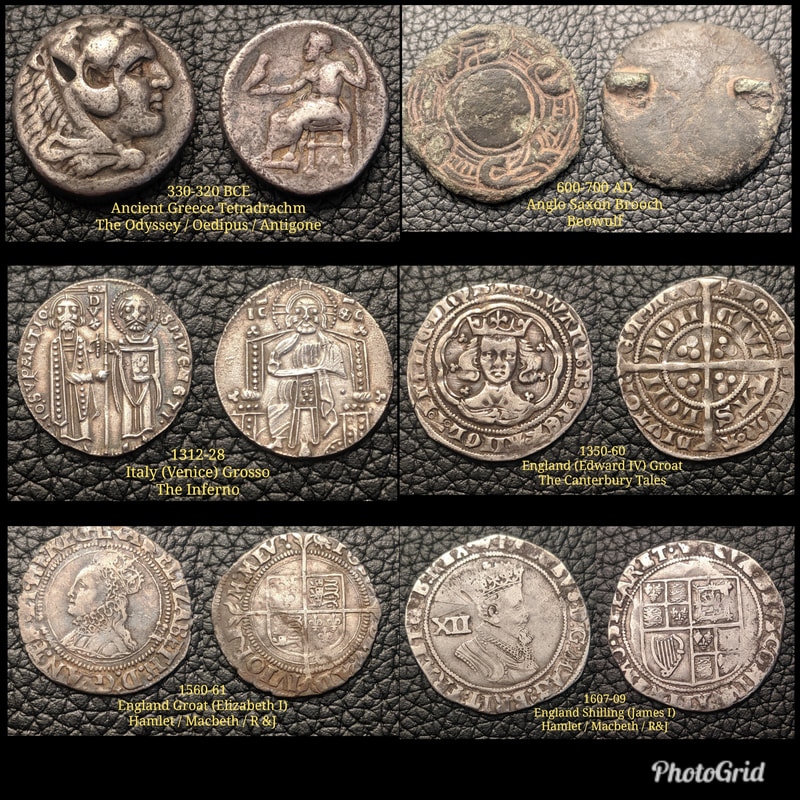 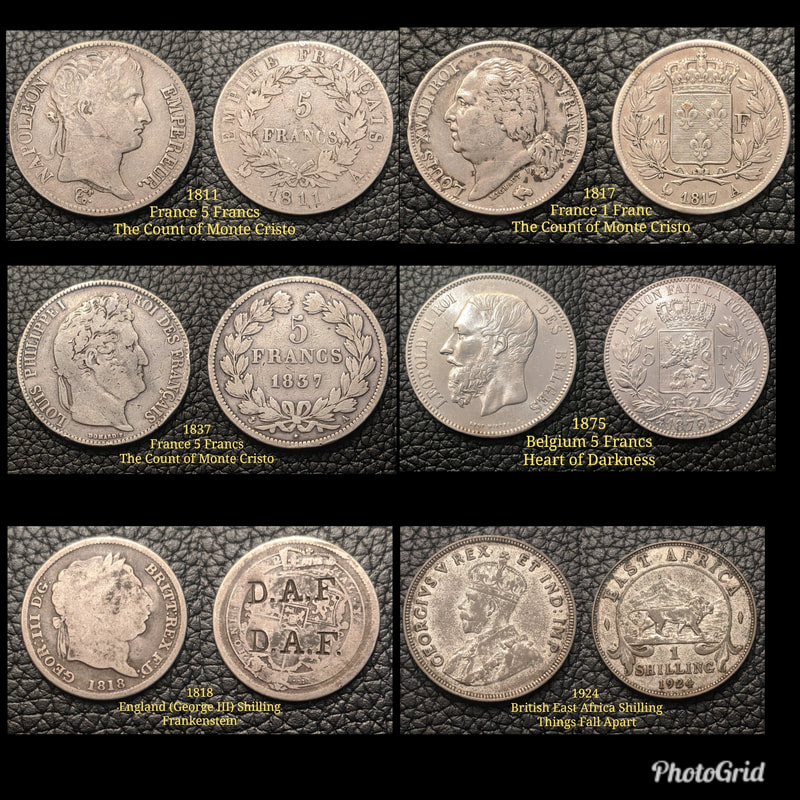 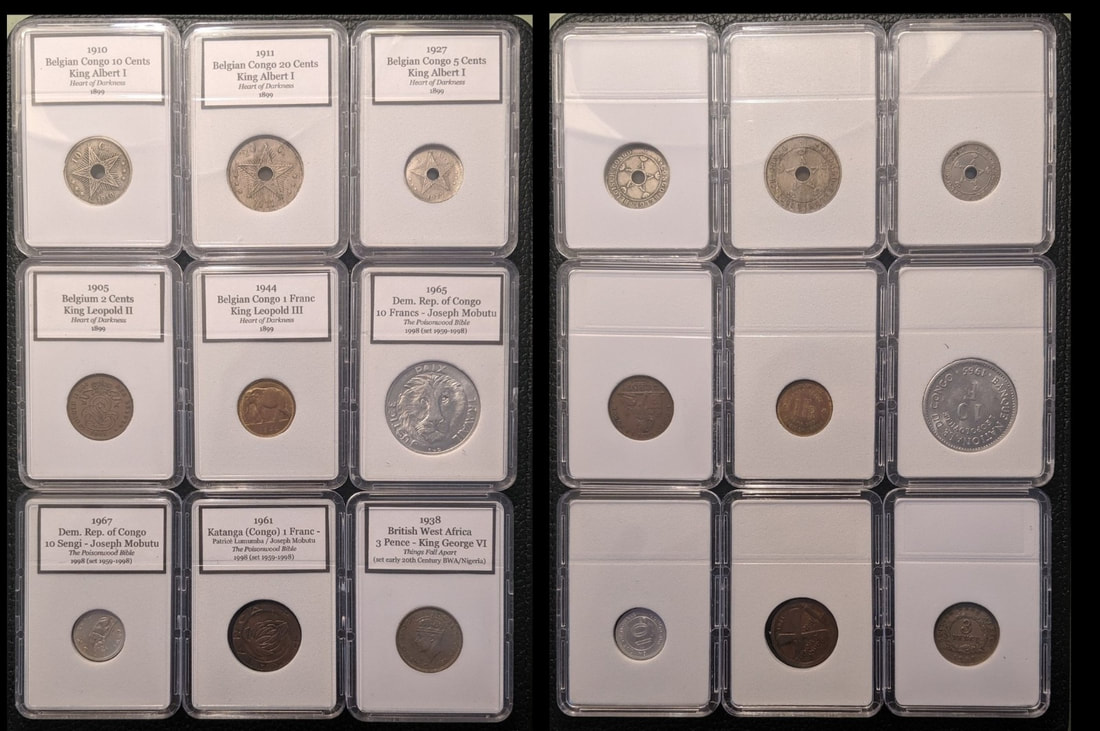 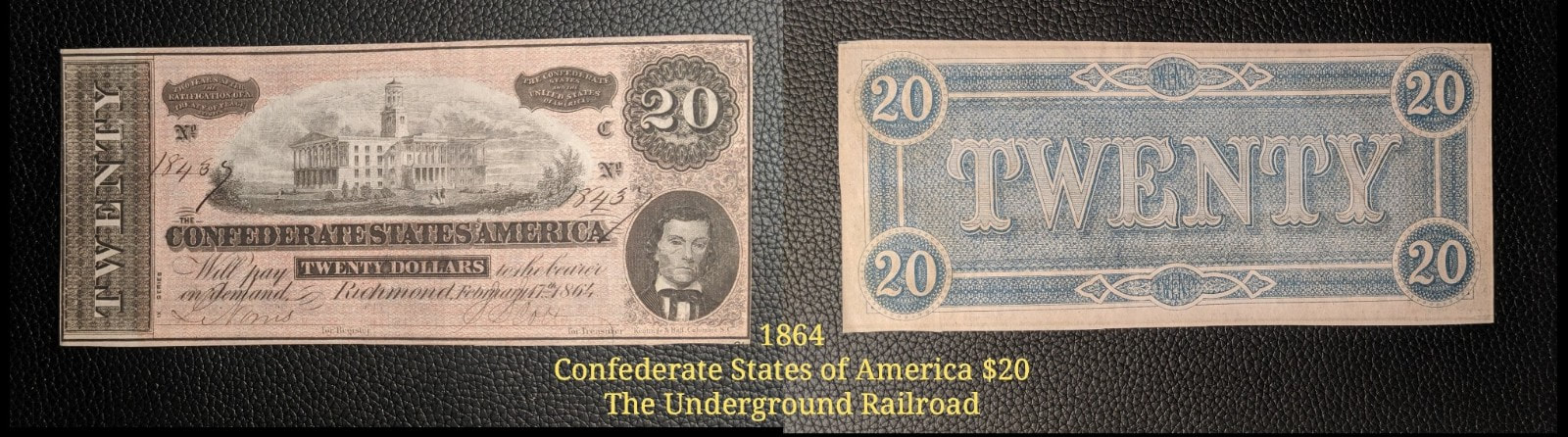 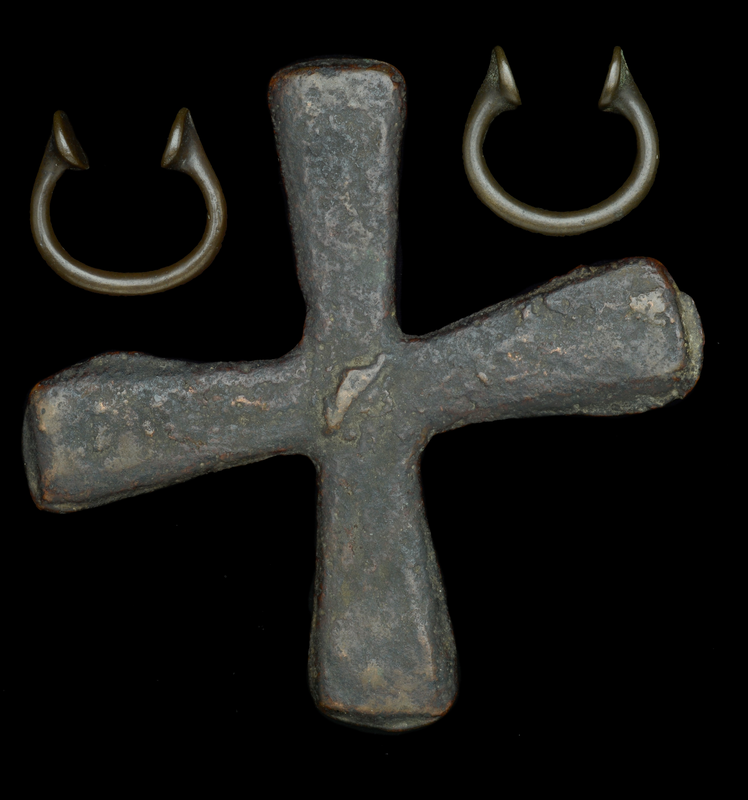 Now, while these pieces aren't exactly "coins" per se, they were both used as currency. I purchased these pieces from an estate and they will become part of my permanent collection. Both pieces originate from Africa during colonial times. The Katanga Cross was a form of currency used in the Congo region of central Africa during the mid-19th century. They measure roughly 8 inches across and weigh roughly 800 grams (1.75 lb.). As currency, a Katanga cross would buy about 10 kilograms (22 lb.) of flour, five or six fowls, or six axes. Ten would buy a gun. They were cast in sand molds pictured below. 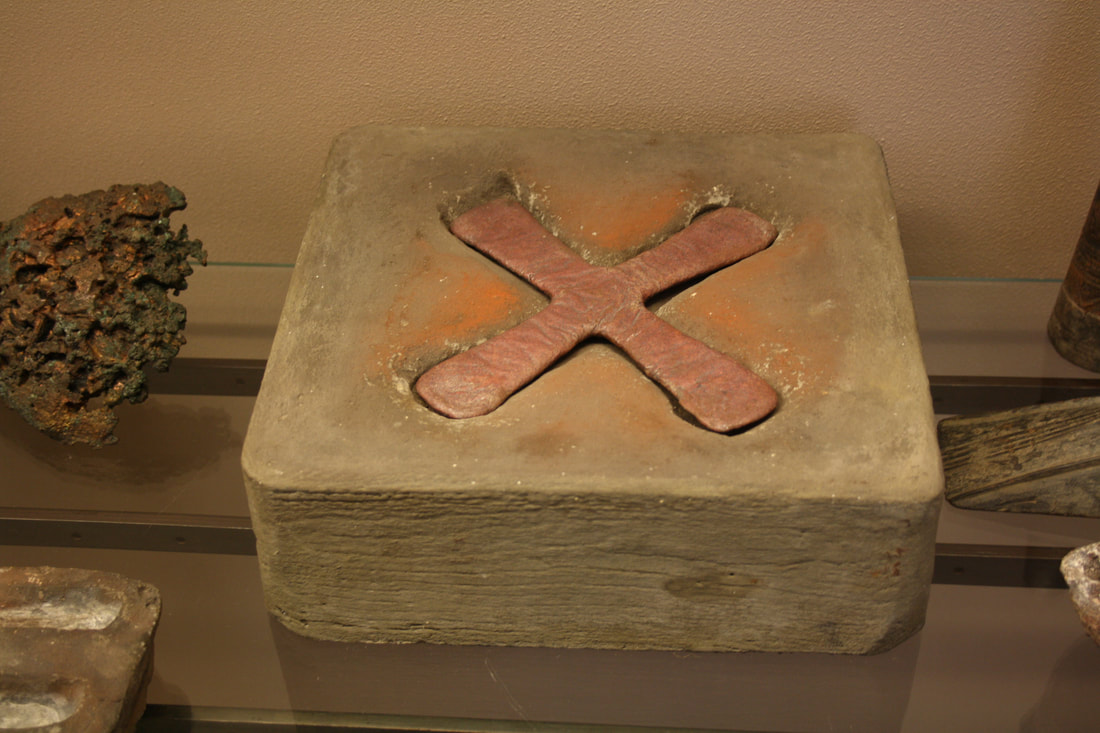 The two bracelets in the first photo are known as Manillas and were used as currency during the slave trade. These bronze or copper pieces were produced in England, typically Birmingham, and brought to the coast of west Africa for trade. A typical Manilla of roughly 3" would have enough value to purchase a single slave from an indigenous tribal leader. Larger or more decorative pieces than the ones shown here carried an even higher value. These Manillas are a grim reminder of one of the darkest eras of western history.
|
 RSS Feed
